History

HISTORY OF KILGORE COLLEGE

C.M. “Buck” Kilgore, whose family first settled in nearby Danville, founded the town of Kilgore (Texas) in 1872. When the International and Great Northern Railroad came to East Texas and located its terminal four miles west Danville, Mr. Kilgore realized the advantages of living near the railroad and moved his family to a new home near the depot located in present-day Kilgore.

As time went by, many from the Danville area migrated to the new settlement; and by 1880, the town had a population of 300 with a hospital, drugstore, depot, two mercantile stores, five dry goods stores, several nice homes, eight saloons and a commitment to education.

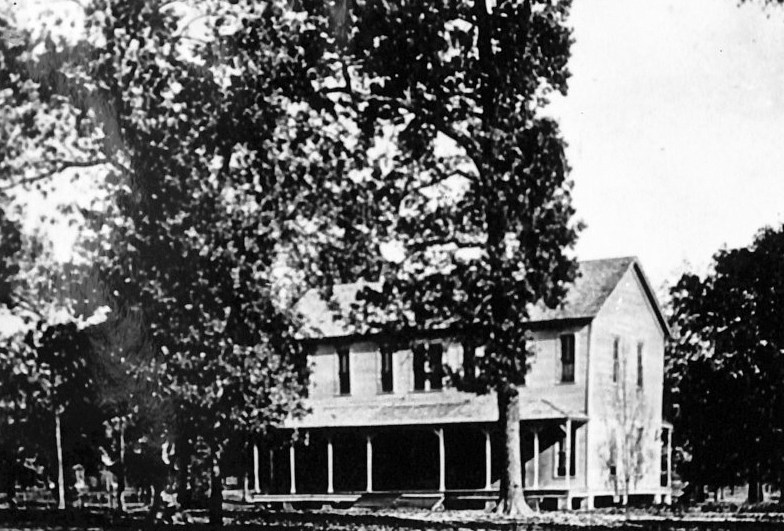
In 1873, Professor Isaac Alexander, a prominent educator, established the Alexander Institute in Kilgore and operated a very successful educational institution until it was moved in 1894 to Jacksonville, Texas, where it became Lon Morris College. Gregg County made its first serious attempt at a uniform school system in 1893 by dividing the county into eleven districts. By 1912, the Kilgore School District was a better-than-average school district in the state with an area of 25 square miles and an enrollment of 125 students.

The Alexander Institute is pictured above. Founded in 1873 by Dr. Isaac Alexander in Kilgore, the school later moved to Jacksonville and became Lon Morris College, part of the region’s higher education history that would later include the founding of Kilgore College.

THE OIL BOOM YEARS

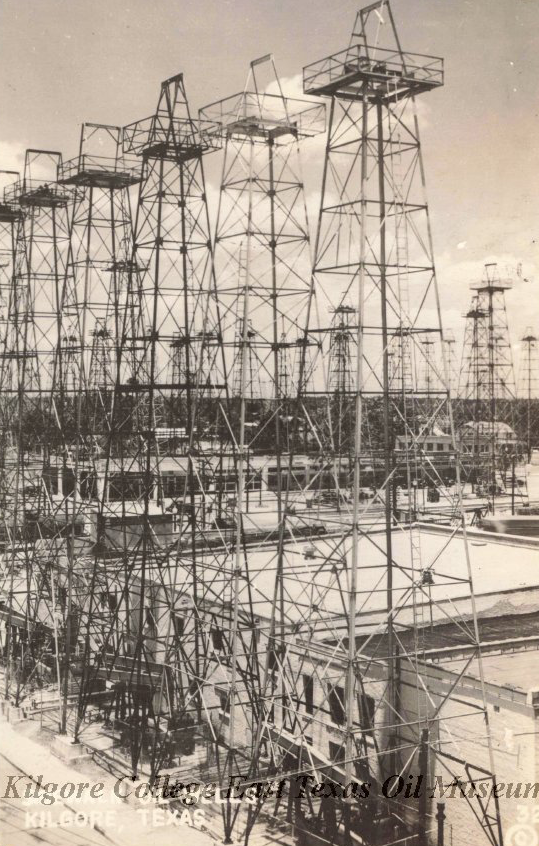
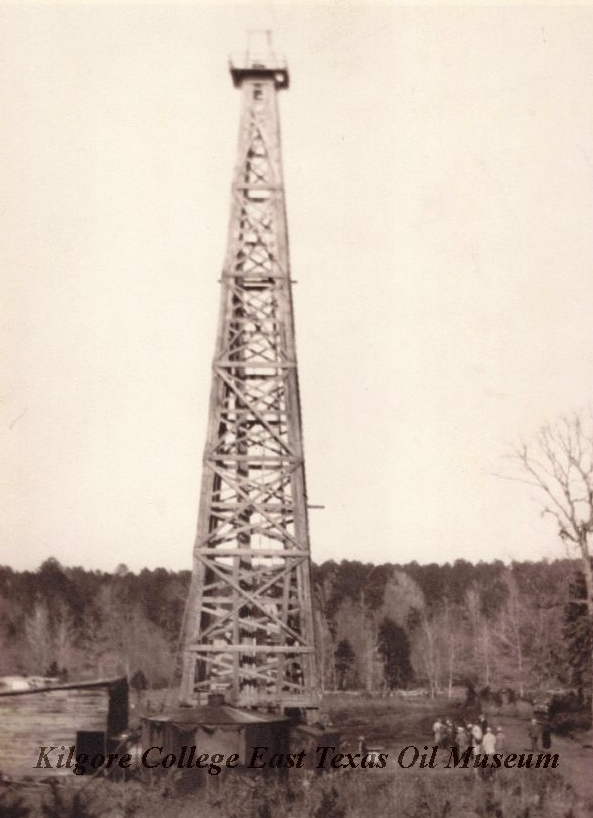
Life in Kilgore changed dramatically on Dec. 28, 1930, when the Lou Della Crim No. 1 well struck oil, producing more than 20,000 barrels of crude per day.

The boom was on.

Oil derricks quickly filled the skyline, and the town’s population surged from about 800 to 15,000 within months. Kilgore was formally incorporated in Feb. 1931.

With newfound prosperity from the East Texas oilfield, civic and business leaders began pursuing what once seemed impossible — establishing a community college. They envisioned an institution that would serve local young people and have a lasting impact on communities across East Texas.

Above: The Lou Della Crim No. 1 well in 1930.

The beginnings of Kilgore College

W.L. Dodson, superintendent of Kilgore Independent School District, urged the school board to establish a junior college. The board authorized him to enlist B.E. Masters, president of Amarillo Junior College, to help implement the plan.

Masters arrived in April 1935 and met with the board of education. In Aug. 1935, the board named Dodson president and Masters dean. To begin classes that fall, officials agreed the college would operate under Kilgore ISD and temporarily use public school facilities.

Kilgore College opened in fall 1935 with 11 faculty members and 229 students.

In 1946, the Kilgore ISD Board of Trustees invited neighboring school districts to form a union district for junior college purposes. Seven districts — Sabine, White Oak, Leverett’s Chapel, London, Overton, Gaston and Gladewater — later joined the Kilgore College District. The district is governed by a nine-member board of trustees elected by the participating districts.

Kilgore College was accredited by the Southern Association of Secondary Schools and Colleges in 1936. By 1940, it had the largest enrollment of any public junior college in the South. In 1948, it ranked second nationally in the number of students transferring to senior colleges.

In 1946, the Board of Trustees of the Kilgore Independent School District issued invitations to neighboring common and independent school districts, inviting them to join a union district for junior college purposes. Seven districts—Sabine, White Oak, Leverett’s Chapel, London, Overton, Gaston, and Gladewater—have since joined the Kilgore College District. The college district is now directed by a board of trustees of nine members elected by the individual districts.

Kilgore College received recognition by the Southern Association of Secondary Schools and Colleges in 1936, and by 1940, had the largest enrollment of any public junior college in the South. In 1948, it was the second junior college in the nation in the number of transfers to senior colleges.

(History information is from the book, “A History of Kilgore College: 1935-1981,” by Bonnie Durning and Doris Bolt, retired KC history instructors)

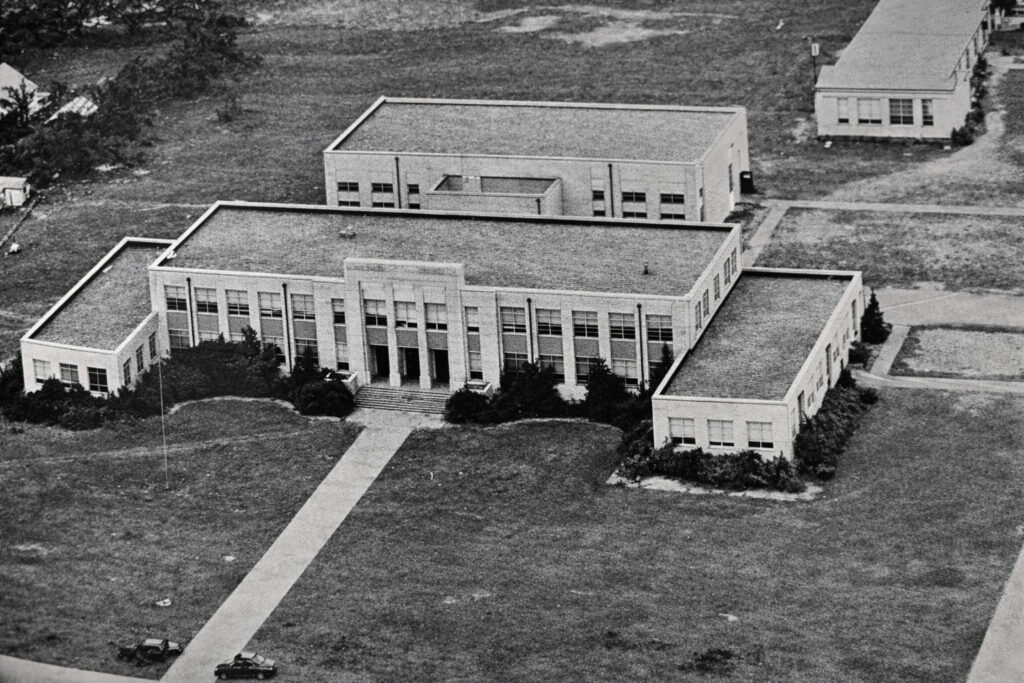
The original administration building in 1935, now the Old Main Building. KC enrollment increased from 200 students in 1935 to 630 students in 1940, making KC the largest community college in the South.
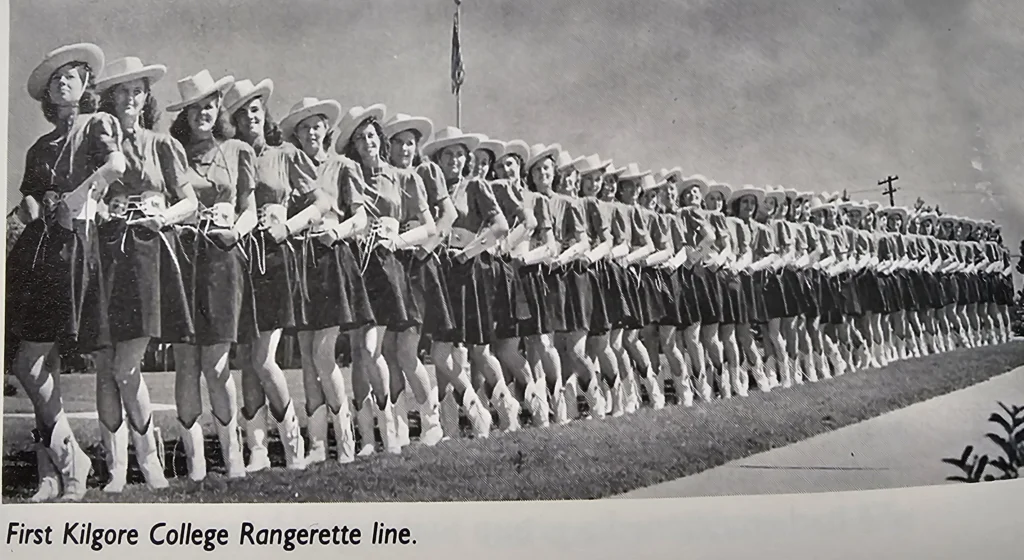
The Kilgore College Rangerettes were founded in 1940 by their first director, Miss Gussie Nell Davis.
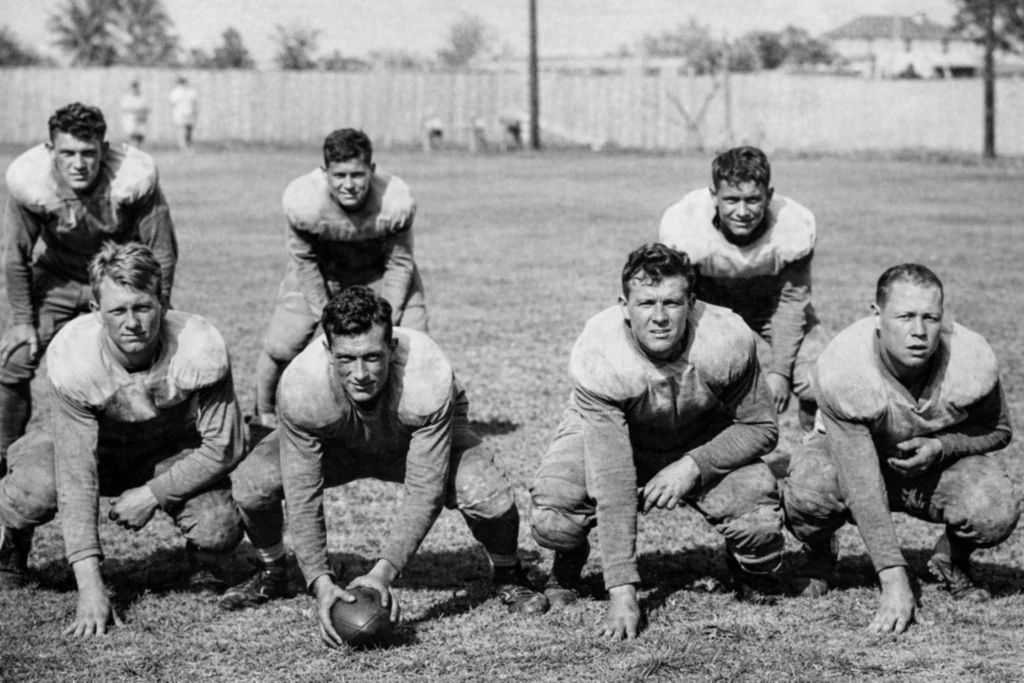
The first football team hit the field in 1935

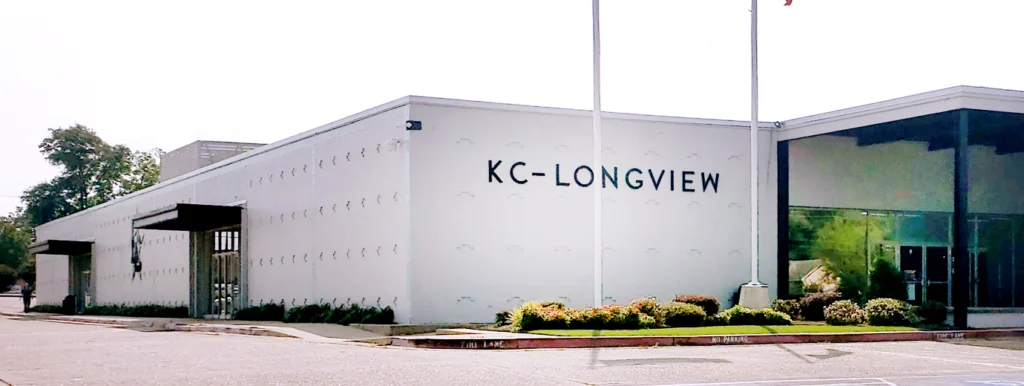
KC-Longview

The college has maintained a center in Longview since 1976, and KC–Longview serves approximately 3,000 students each year.

For 50 years, KC–Longview has evolved into a comprehensive educational site offering university transfer courses, workforce education, lifelong learning, and Adult Education and Literacy (AEL) programs, including preparation for the Certificate of High School Equivalency (GED).

In addition to academics, KC–Longview provides a full range of student services, including academic counseling, tutoring, testing, cashier, and bookstore services.

The location also houses several workforce education programs, including Business (Business Computer Office Management), Cosmetology (including Nail Technology and Facial Specialist), Culinary Arts, HVAC-R (Heating, Ventilation, Air Conditioning and Refrigeration) and Industrial Maintenance Technology.

Kilgore College–Longview is an extension campus serving Gregg County and surrounding areas. Located in Longview, the campus offers Adult Education, workforce and technical training courses designed to meet regional workforce needs.
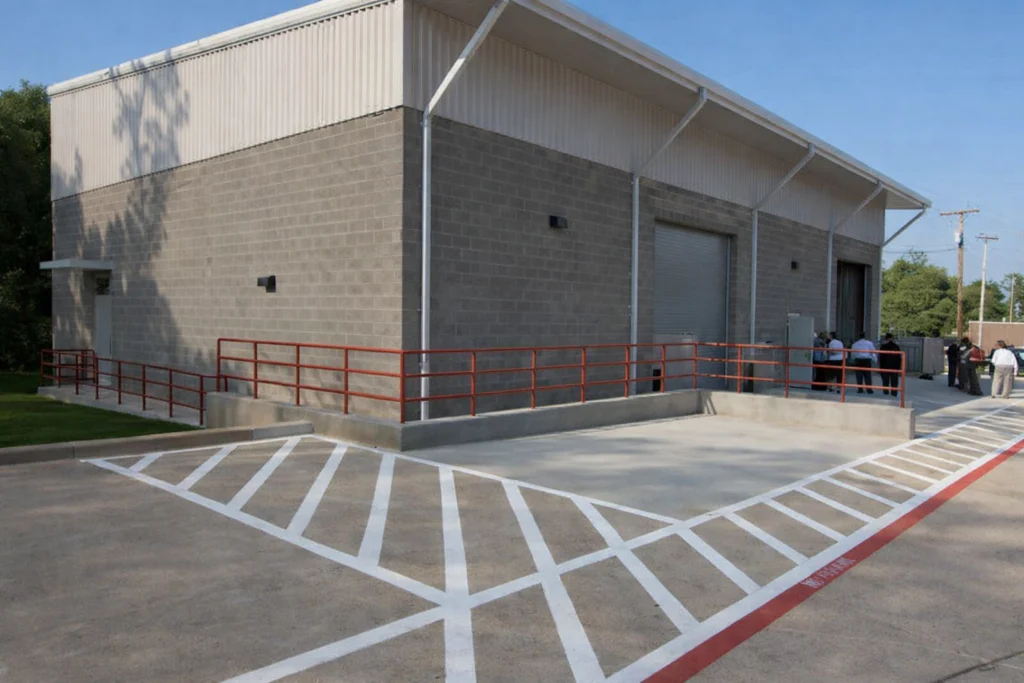
The Industrial Maintenance Building at KC–Longview is pictured above. Kilgore College began offering Industrial Maintenance Technology degrees and certificates in fall 2008, preparing students for careers in manufacturing and industrial maintenance.

Kilgore College today

Kilgore College, which recently celebrated its 90th anniversary, is an accredited public two-year community college in Kilgore, Texas, that has served the academic and workforce needs of East Texas since 1935. The college provides a learner-centered environment focused on student access, success and completion through collaborative partnerships. It is led by Interim President Dr. Staci Martin.

KC serves a 20-district area in Northeast Texas and offers more than 130 academic, career and technical education programs, including Associate in Arts and Associate in Applied Science degrees and certificate options. The college has seen significant enrollment growth in recent years, with more than 7,000 students enrolled in credit and continuing education courses in 2024–25. KC students represent a diverse mix of full- and part-time learners, and many take advantage of online and dual credit opportunities.

In addition to transfer coursework, KC offers workforce programs in high-demand fields such as nursing, law enforcement, firefighting, EMT, culinary arts, process technology, welding, radiologic technology, automotive technology and industrial maintenance. The college also provides workforce development and continuing education courses for lifelong learners and customized training for local industry, along with an international student program.

KC’s athletic teams, known as the Rangers, compete in Region 14 of the National Junior College Athletic Association, including football, men’s and women’s basketball and softball. The football program is one of the most successful junior college teams in Texas, with multiple conference and national titles.

KC is also home to the historic Rangerettes, the first precision dance team of its kind in the United States. Founded in 1940 by Gussie Nell Davis, the Rangerettes helped pioneer modern dance-drill teams and have become an iconic symbol of KC spirit. The group has performed nationally at events including the Macy’s Thanksgiving Day Parade, the Cotton Bowl and Super Bowl halftime shows, and has influenced countless high school and college dance programs across the country.

The college campus also features two unique museums that celebrate the region’s heritage and KC traditions. The East Texas Oil Museum tells the story of the East Texas oil boom of the 1930s, one of the largest petroleum discoveries in U.S. history, through immersive exhibits and historically recreated environments. The Rangerette Showcase & Museum preserves the legacy of the world-famous Rangerettes, displaying historic uniforms, memorabilia, photographs and interactive exhibits. KC is also home to the Texas Shakespeare Festival, the only professional theatre in East Texas.

The college maintains an open-door admissions policy and supports students with distance learning, developmental education, dual credit, comprehensive financial aid and academic advising designed to promote completion and transfer success.

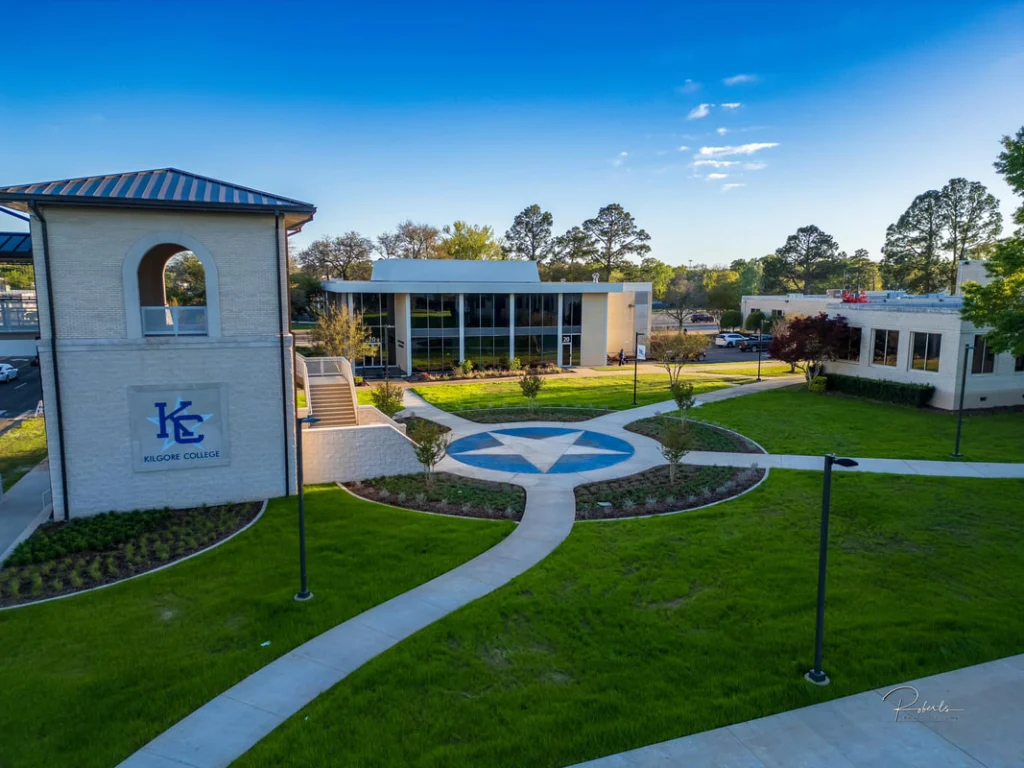
Photos courtesy of Roberts Photo + Cinema

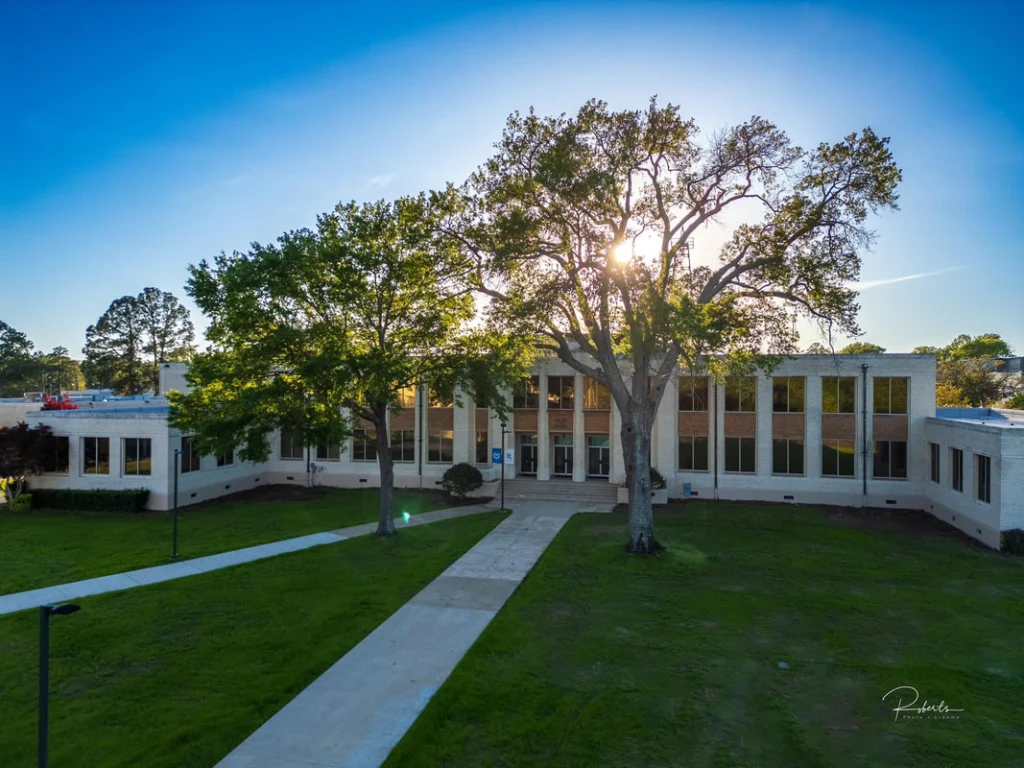
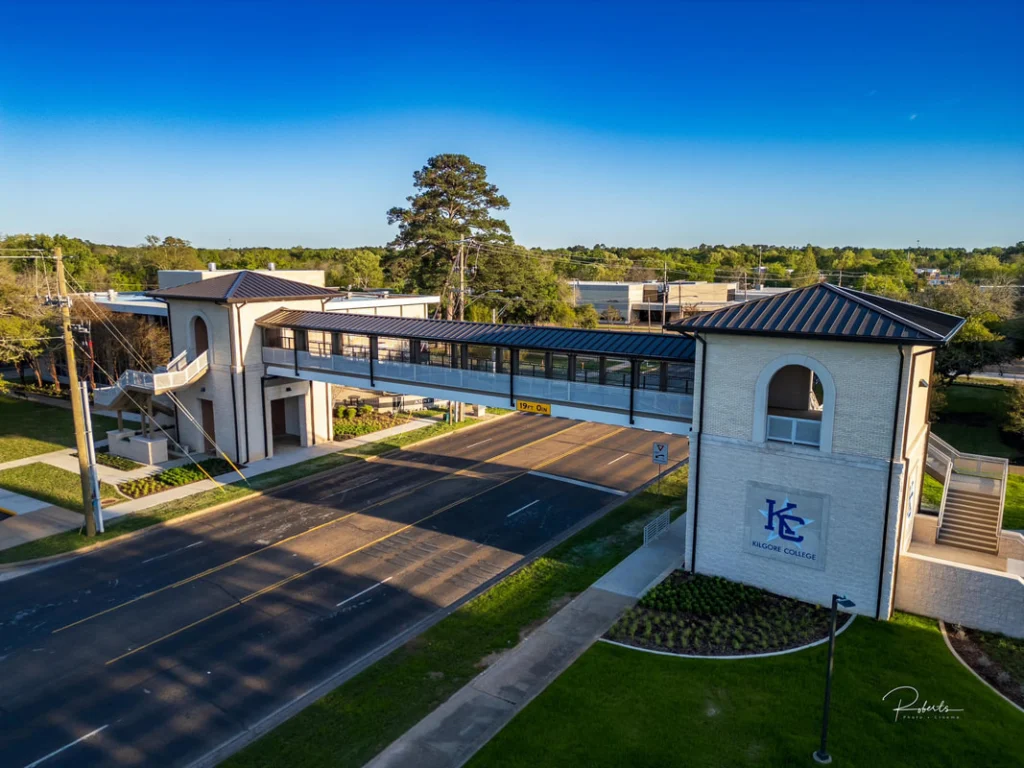
Kilgore College's plaza, administration building and new pedestrian bridge.
Old Main Building facing Henderson Blvd.
KC's new pedestrian bridge crossing, connecting the East to West parts of campus. Photo courtesy of Roberts Photo + Cinema
presidents all-time

NAME DATES LENGTH OF SERVICE
W.L. Dodson
Aug. 1, 1935 to May 23, 1946
10 years, 10 months
Dr. B.E. Masters
May 23, 1946 to Jan. 1, 1954
7 years, 7 months
Dr. Cruce Stark
Jan. 1, 1954 to June 1, 1964
10 years, 5 months
Dr. Randolph C. Watson
June 1, 1964 to Aug. 31, 1978
14 years, 3 months
Dr. Stewart McLaurin
Sept. 1, 1978 to Jan. 3, 1989
10 years, 4 months
Bert E. Woodruff
Jan. 19, 1989 to Jan. 31, 1993
4 years
Dr. Frank J. Thornton
Feb. 1, 1993 to July 31, 1996
3 years, 6 months
Dr. William Holda
Aug. 1, 1996 to Jan. 31, 2016
19 years, 6 months
Dr. Brenda S. Kays
Feb. 1, 2016 to Feb. 28, 2026
10 years, 1 month
Dr. Staci Martin (interim)
Nov. 1, 2025 to Present